Livingston Island is home to elephant seals and penguins. Although it has several research bases, human presence is scarce. The nearest city, Ushuaia in Argentina, is 1,000 kilometers away. And yet, in its waters and along its shores, there are traces of nicotine and caffeine from sunscreens, painkillers, and even industrial anticorrosive. Despite the plain isolation of the frozen continent, the presence of emerging pollutants in its ecosystems is increasing.
Some of the pollutants present in Antarctica arrive via humans visiting the continent. However, most originate from wastewater discharges and waste incineration in all parts of the world. Various analyses have also found substances in Antarctica that can disrupt the hormonal system, flame retardants, heavy metals such as aluminum, and microparticles of materials such as polyester and Teflon.
Antarctic weather conditions and current systems also mean that many of the emerging pollutants that are transported there remain confined to the southern continent. However, concern about this type of pollutant is not exclusive to Antarctica and continues to grow worldwide.
What are emerging pollutants?
Emerging pollutants, also known as pollutants of emerging concern, are a diverse group of chemical and biological agents whose effects are causing increasing concern due to the wide variety of their chemical structures, and the difficulties traditional wastewater treatment systems have in removing them. According to the definition provided by Spain’s Ministry for Ecological Transition, these are not new substances but rather compounds that until recently could not be quantified.
In recent years, thanks to advances in analytical chemistry, they have been described in detail. Even so, the number of substances that can be classified as emerging pollutants is indeterminate. According to the Spanish ministry, these include a multitude of drugs for human and veterinary use, pesticides, insecticides, and other biocidal products, additives in materials used industrially such as antioxidants, flame retardants, plasticizers, and anticorrosives, household products such as detergents and cosmetics, and drugs.
What are the effects of emerging pollutants?
“Emerging pollutants are substances that are not regulated and, therefore, there are no standards setting up limits in water and soil. In addition, these pollutants are found in exceptionally low concentrations in the environment, so they do not present acute toxicity,” explains Marcela Ayala, a researcher at the Institute of Biotechnology at the National Autonomous University of Mexico (UNAM). “However, they have harmful effects on living beings, usually in the long term, such as genetic malformations in amphibians and reptiles, feminization of aquatic animal populations, or the acquisition of antibiotic resistance in bacteria.”
According to the Mexican scientist, there are some groups of emerging pollutants that are particularly worrying. This is the case with endocrine disruptors, whose constant presence in the body can cause long-term effects by altering hormonal systems. “This has already been documented in fish, reptiles, and other aquatic animals,” Ayala points out. “In addition, the presence of drugs such as antibiotics and antidepressants is worrying because the effects of prolonged exposure, even at low concentrations, on humans are unknown.
Emerging pollutants have been detected all over the world, even in Antarctica. Although their presence is intricately linked to urban and industrial environments, they have gradually infiltrated underground aquifers through wastewater, eventually reaching rivers and lakes, coastal ecosystems, and oceans. From there, following the water cycle, the most persistent substances (those that do not degrade easily) can be precipitated anywhere on the planet.
Solutions to address emerging contaminants
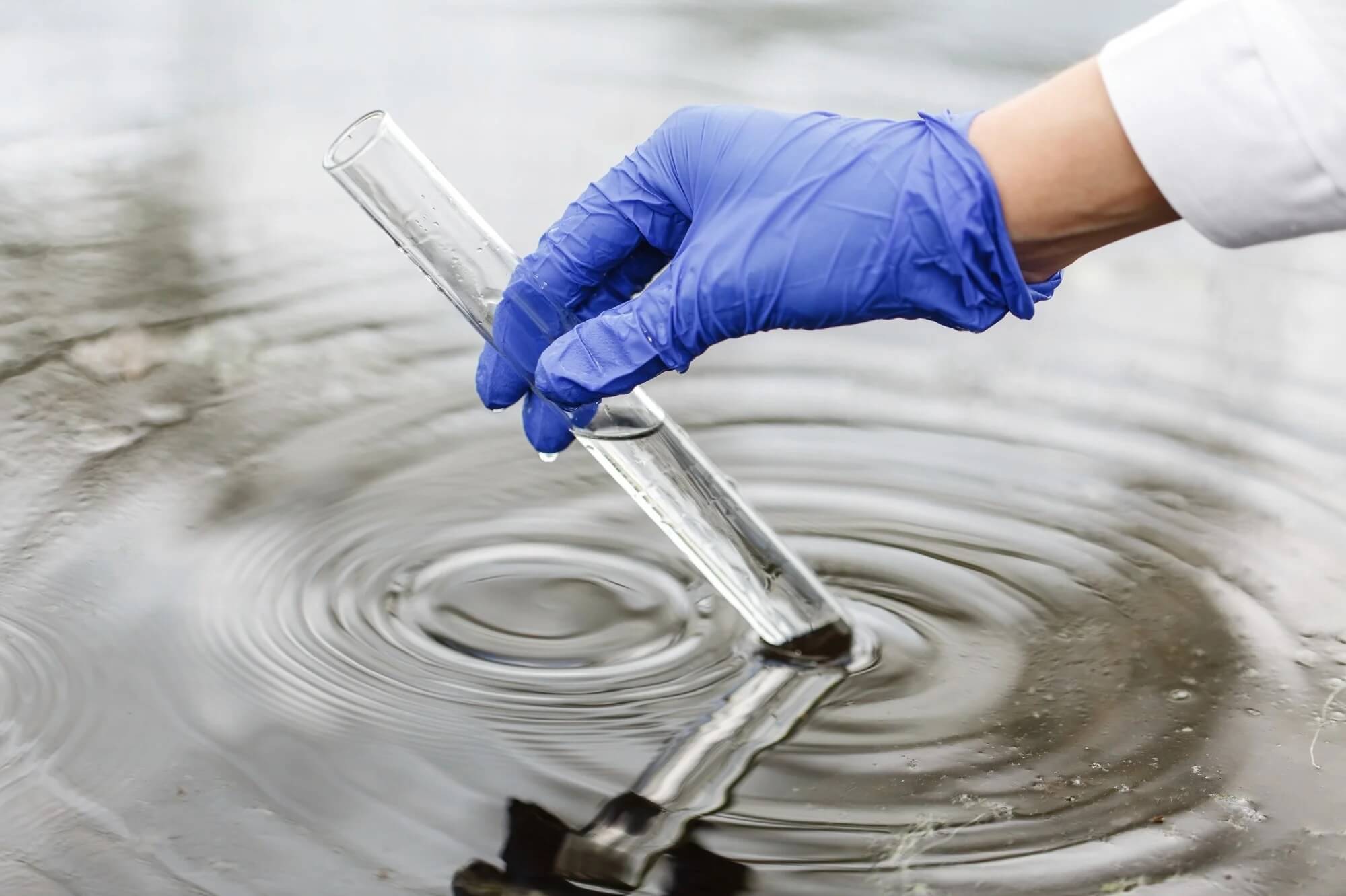
Beyond their direct effects on living beings, the greatest challenge posed by emerging pollutants is their wide variety. The European Commission’s annual watch list of emerging substances of concern alone has seventy-five different compounds. At present, the first step in solving the problem is to characterize the toxicity and effects of these pollutants and figure out the extent to which they are present in wastewater and natural ecosystems.
In addition, it is important to describe the possible interactions between compounds. In nature and in organisms, pollutants are rarely present in isolation. It has been scientifically proven that compounds that are not toxic individually multiply their toxicity when combined with others. From this point, once each pollutant has been studied in detail, solutions can be developed to accelerate their degradation in nature and thus minimize their impact.
The team Marcela Ayala is part of at the UNAM Biotechnology Institute, for example, is studying the use of enzymes to end emerging pollutants or transform them into compounds with less environmental impact. “We are working on the use of cell-free enzymes which, due to their natural ability to recognize chemical compounds at low concentrations, could be a viable alternative to solve this problem,” explains the researcher.
“In addition, there are other approaches, such as physicochemical treatments like ultraviolet radiation or ozone, or biological treatments like those used in wastewater treatment plants,” he adds. “However, they are not always 100% effective in removing the wide variety of emerging contaminants present in water.” As with other sources of pollution, it is still more effective to prevent these substances from ending up in the environment than to find and end them once they have already entered ecosystems and food chains.
SOURCE: BBVA