With the 21st century bringing unprecedented challenges, young people can serve as a strategic compass in navigating them.
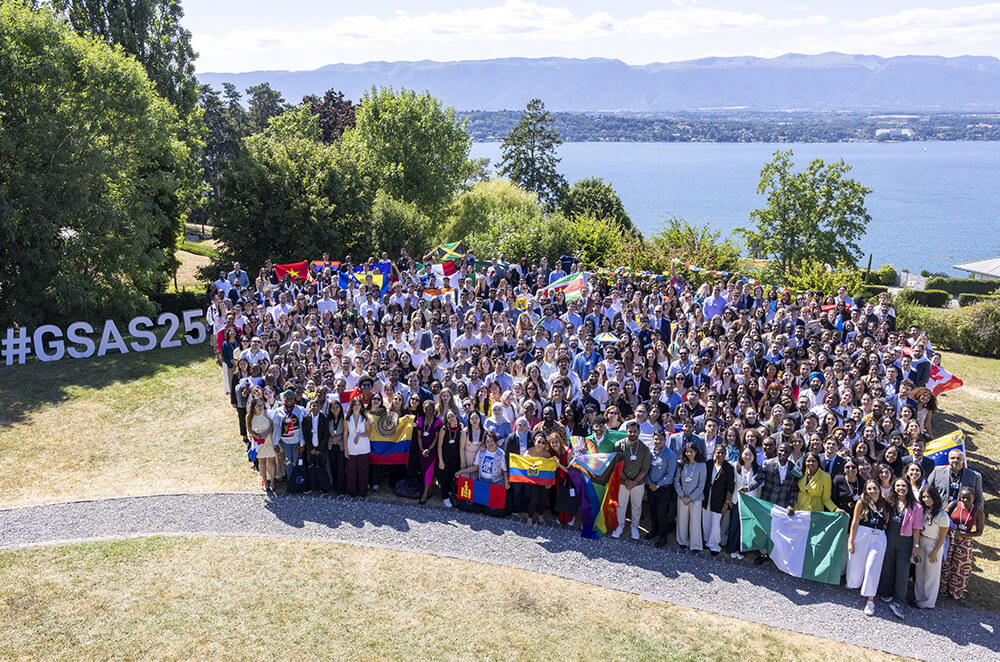
The 2025 Global Shapers Annual Summit brought together 500 young leaders from around the world to share their perspectives.
Their priority areas included compassionate leadership, climate, and tech.
The 1990s painted a picture of limitless optimism. The Cold War ended, and global peace seemed within reach, followed by economic prosperity and the dawn of the internet era. Many assumed that the future would be peaceful, ever more prosperous, and less divided.
However, technological breakthroughs, medical advances and increased awareness about environmental and social issues did not just solve problems. They revealed new layers of interconnected challenges that demanded more informed decision-making.
The 21st century has brought an unprecedented level of complexity and challenge, with rapidly shifting economic, political, and social landscapes placing greater expectations on leaders than ever before. In a world that is home to 1.8 billion young people, the largest youth generation in history, the burden, and the opportunity to lead have fallen on their shoulders.
Change has never been brought by those who wait for it to happen. This was the spirit that defined the 2025 Global Shapers Annual Summit held in Geneva, Switzerland from 9 to 11 July, where 500 young leaders from more than 150 countries and territories came together to shape the global agenda.
The summit opened with a call for constructive optimism and purposeful leadership. With youth perspectives being pivotal in driving meaningful change across local, regional, and global levels, the Strategic Intelligence unit of the World Economic Forum captured the collective voice of the Global Shapers during the summit. These inputs reflect the diverse realities, challenges, and aspirations of young people globally, offering a comprehensive view on some of the most pressing themes.
In a world marked by rapid technological shifts, climate instability, shrinking economies and evolving social expectations, one thing is clear: Youth insights are a powerful tool to shape a bold new vision for the future. Here is what they are prioritizing:
- Leading with purpose and courage
Young leaders are redefining what it means to lead with purpose and courage. They are embracing a human-centered approach that prioritizes empathy, authenticity, and emotional intelligence over outdated notions of efficiency.
During the summit, the Global Shapers emphasized the need to build resilient teams by fostering safe spaces, meaningful mentorship, and intergenerational dialogue. They raised concerns about traditional top-down cultures that often lead to burnout and called for a shift towards leadership models that value psychological safety and collaborative problem-solving.
To avoid intergenerational conflicts, it is important to focus on understanding different perspectives, empowering younger generations to take significant roles, addressing preconceptions about generational capabilities, fostering inclusive environments, and keeping continuous learning processes that adapt approaches based on experience.
- Youth economy and skills for tomorrow
The Global Shapers made it clear: Building a fairer future requires bringing together voices from all sectors, including those with informal and formal education, diverse abilities, and underrepresented communities. Diversity and intergenerational collaboration are strategic necessities in a world where artificial intelligence (AI) and automation are the future of work.
At the same time, they underlined the need to evolve human skills in tandem with technological advancements. As digital tools continue to transform how we work and communicate, they must be used to amplify essential human skills like empathy, critical thinking, and collaboration.
Young people should be positioned as active partners in shaping economic policies and employment structures, not passive beneficiaries of decisions made by others. To make this transition, Global Shapers believe that education systems must also undergo an important transformation. Practical pathways such as apprenticeships, internships, and youth inclusion in policymaking will be essential to bridge school-to-work transitions and address rising youth unemployment.
- Youth-led tech for impact
Young innovators are calling for a bold rethink of how we develop and deploy emerging technologies. They believe that AI must serve people and the planet, not just profit and efficiency. Technology should be harnessed to advance human dignity and reduce inequality, not deepen existing divides.
The Global Shapers standing for developing economies demanded technology that works to enable others rather than create dependencies, emphasizing the need for inclusive and conscious technological advancement that leaves no one behind.
Embedding youth participation in policy and governance is essential to safeguard democracy in a digital age. As institutions face growing polarization and trust deficits, including young voices in tech governance can help rebuild legitimacy and responsiveness.
- Revolutionizing social innovation
Shapers are fundamentally redefining social innovation beyond traditional charity models, toward systemic transformation that places people and planet at the center. They view social innovation as the intersection of creativity and impact, where meaningful change occurs through direct ground-level engagement with communities. Their approach prioritizes addressing root causes of social and environmental challenges rather than merely treating symptoms, reflected strongly in Global Shaper Hub-led projects throughout the world.
Young leaders are responding to a pattern they have noticed and experienced repeatedly, one where organizations commit to social innovation without youth and limited local knowledge. The Shapers acknowledged the change brought by certain organizations that shift resources and decision-making to young people to shape solutions, but it is a rarity. These patterns surface in the form of unemployment, which is still a pressing concern for the youth.
The gap between organizational commitment and actual action continues to frustrate young innovators. Shapers want social innovation that extends and strengthens civil society through new strategies, digital platforms and organizations that address working conditions, education, community development and health. They demand value-driven approaches that prioritize equity, sustainability, and inclusion over traditional metrics, always keeping people at the center of every initiative.
- Igniting intergenerational climate leadership
Climate leadership dialogue among Global Shapers pushes beyond traditional environmental activism and advocates for a framework that addresses economic interests alongside life well-being. They recognize that successful climate action requires collective action across generations. However, they are frustrated by persistent structural barriers that limit their influence despite their presence in climate discussions.
The Shapers advocate for “just transition” policies that ensure no communities are left behind as economies shift toward sustainability. These should draw on emerging frameworks that recognize youth-led climate initiatives as drivers of solutions using innovative technology and circular economic models.
Young people want climate leadership that aligns economic incentives with creating a livable future for all. The youth climate agenda extends beyond emissions reduction to encompass biodiversity protection, circular economy principles and climate-resilient infrastructure, with policies designed with youth representation from the outset.
The 2025 Global Shapers Annual Summit revealed a generation that refuses to wait for permission to lead and believes in acting now. As the world continues to navigate uncertainty and opportunity, the collective wisdom and action of the Global Shapers community provides a strategic compass for building more fair, sustainable, and innovative societies. These priorities prove that this generation is not waiting for permission to lead; they are already reshaping the world.
SOURCE: World Economic Forum