
FORESTS AND TREES CAN BE POWERFUL ALLIES FOR AGRICULTURE
Promoting synergies between forests and agriculture is essential for sustainable agrifood system transformation. Agriculture and forests are often viewed as competing land uses with perceived trade-offs especially stark in regions where land is scarce or highly coveted for agricultural production, fueling debate on how best to balance food security and forest conservation. Yet, a growing body of evidence shows the many ways that forests and trees enhance agricultural productivity and resilience.
This technical report, a collaboration between the Food and Agriculture Organization of the United Nations (FAO), Stockholm Environment Institute (SEI), The Nature Conservancy (TNC) and Conservation International (CI), synthesizes the latest scientific evidence on a range of climate and ecosystem service-related benefits that forests and trees provide for agriculture. It specifically examines their role in regulating climate, rainfall, and water availability at multiple scales, affecting the productivity and resilience of crops and rural workers, and supporting pollination, soil, and pest management. This report shows that, together, these ecosystem services are vital for supporting agriculture across a diversity of contexts.
FOREST MODERATE TEMPERATURES, SUSTAIN RAINFALL AND REGULATE THE WATER CYCLE
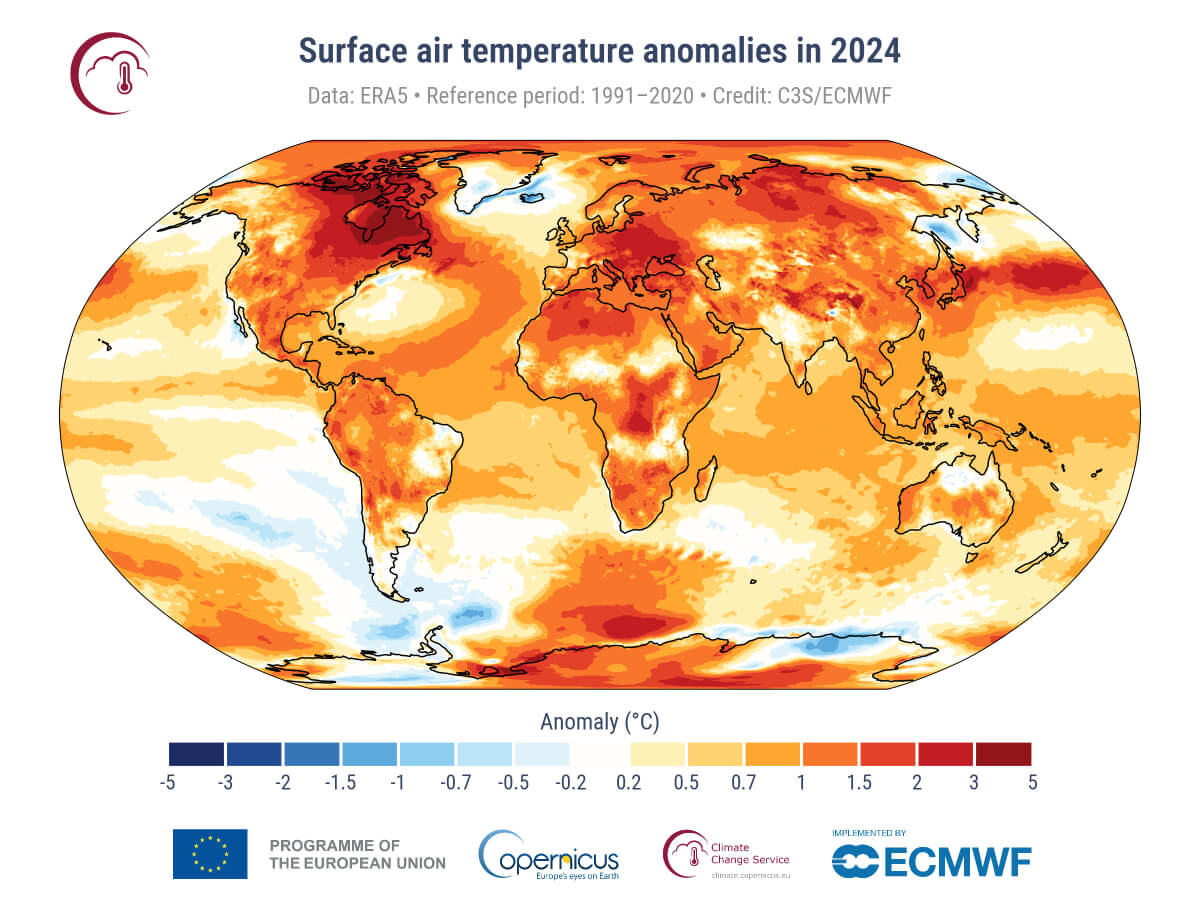
Forests play a critical role in regulating climate at multiple scales. They moderate temperatures, sustain precipitation and reduce the impacts of droughts, thereby directly supporting agricultural productivity and resilience. In addition to carbon sequestration and storage, forests provide global cooling benefits through evapotranspiration and via their physical structure and chemistry. Tropical forests produce a strong net cooling effect. The conversion of tropical forests to farmland has been shown to reduce evapotranspiration by about 30 percent in Brazil, causing significant local temperature increases. Conversely, restoring 50 percent of deforested land can reverse this trend and lower land surface temperature by 1 °C.
Forests also sustain rainfed agriculture. Through evapotranspiration, forests increase downwind rainfall and regulate their variability, sustaining atmospheric moisture during droughts and providing a consistent flow of moisture to agricultural areas. At the global level, a recent study shows that agricultural areas in 155 countries rely on forests in other countries for up to 40 percent of annual precipitation. At the regional level, the Congo rainforest, recycles over 40 percent of its moisture locally and contributes over 10 percent of precipitation to remote African agricultural areas. Forests regulate water quantity, quality, and timing. Forests and trees – on or nearby agricultural land, but also hundreds of kilometers away – can offer a range of water-related ecosystem services critical for agriculture, including freshwater supply, regulation of water flows, water damage mitigation, and water purification. The water-related ecosystem services from trees and forests to agriculture are insufficiently checked and valued, however, which means that they are underrecognized in the agricultural sector and agriculture-related policies, resulting in economic losses for farmers and countries. An integrated approach to water and land management at various scales is essential for ensuring that the benefits of forests and trees for agriculture are improved.
FORESTS SUPPORT THE WELL- BEING OF RURAL WORKERS
At the local scale, forests create cooler microclimates via shading, evapotranspiration, and canopy roughness. These cooling benefits reduce heat stress for crops and rural communities, safeguarding the health and productivity of rural workers by mitigating heat-related health risks. Rising temperatures due to climate change and local deforestation pose a compound threat to the provision of the services of forests and trees for agriculture.
Clearing forests removes shade and evaporative cooling, causing land surface temperatures to rise, often by several degrees across tropical regions, and up to 3–5 °C locally in the Amazon, creating hotter microclimates where people live and work. Temperature increase due to deforestation can in turn impact human health. Between 2001 and 2020, tropical deforestation is likely to have contributed to around 28 000 added heat-related deaths annually, suggesting that forest loss is both an environmental issue and a potential public health threat.
Forests can sustain local cooling, reduce heat-related health risks, and preserve economic productivity, making forest conservation an essential climate change adaptation strategy, particularly for rural workers with fewer adaptation options.
FORESTS AND TREES PROVIDE OTHER ECOSYSTEM SERVICES FOR AGRICULTURE
Forests and trees deliver other vital ecosystem services – such as pollination, biological pest control, nutrient cycling, erosion control, fodder, mulch, and climate regulation – that enhance crop yields and sustain ecosystem health. Fields near forests may receive help from stronger ecosystem services, especially pollination and biocontrol, but may also experience disservices such as increased exposure to certain pests.
Integrated approaches strengthen climate resilience and food security. Incorporating forests and trees into agricultural systems – as shelterbelts, riparian buffers, and forest patches – can reduce dependence on synthetic inputs, enhance resilience to climate variability, and support the production of diverse, nutrient-dense foods. Integrated approaches can also help maximize synergies and reduce trade-offs among different ecosystem services.
PATHWAYS TO PROMOTE THE BENEFITS OF FORESTS AND TREES FOR AGRICULTURE
Turning knowledge into action is imperative but challenging, since the way in which forests and trees influence agriculture depends on contextual factors like location, distance, and pattern. Furthermore, many ecosystem services from forests flow across spatial and temporal scales with services generated in one forest location helping agriculture in another. Such cross-scale dynamics highlight the importance of coordinated governance, landscape- scale planning, and institutional cooperation across authorities to enhance synergies and manage trade-offs.
Policy and incentives must bridge sectors, recognizing sustainable forest management as a multisectoral strategy for food security, public health, and climate resilience. Global policy processes – in the context of the Paris Agreement, the Kunming– Montreal Global Biodiversity Framework and the joint work on forestry and agriculture linkages by the FAO Committees on Agriculture and Forestry – provide avenues to embed these benefits in national commitments, policies, and plans. Incentivizing and valuing forest benefits, building existing initiatives and innovative finance instruments can accelerate uptake. Finally, empowering local farmers, communities and Indigenous Peoples through co-designed solutions, and informing monitoring and models, will be key to achieving holistic, evidence-based outcomes across scales. Forest conservation, restoration, and sustainable use are sound investments in climate- resilient agriculture, rural livelihoods, and global food and water security. By promoting forest– agriculture synergies, societies can work towards a more productive, sustainable, and fair future for all.
SOURCE: FAO – Study: Climate and ecosystem service benefits of forests and trees for agriculture