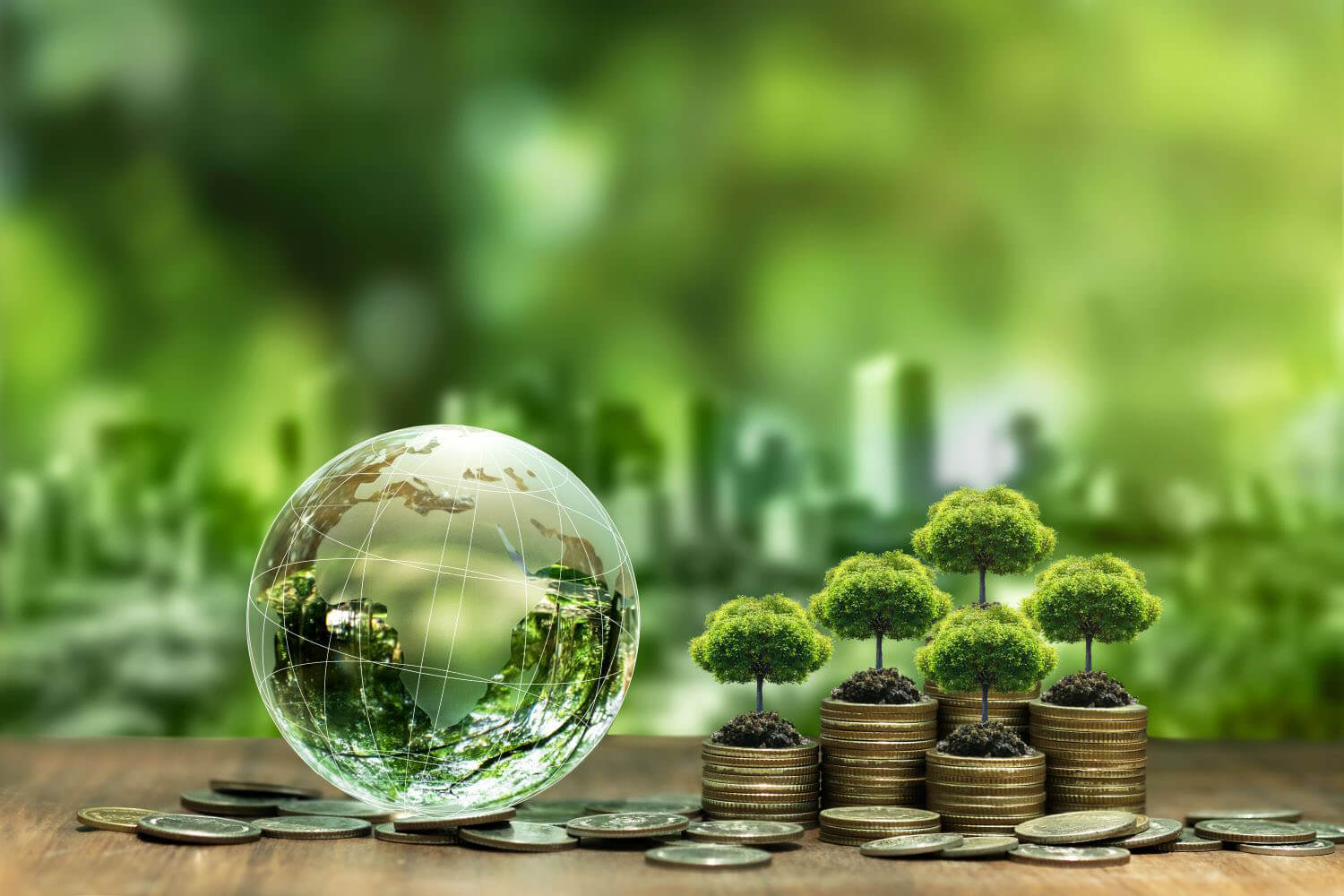
Exchange part of a debt in exchange for investing in policies that have a positive impact on the environment. This financial strategy, which is not without controversy, allows debtor countries to use these resources for climate or nature projects, and creditor countries to count it as international development financing.
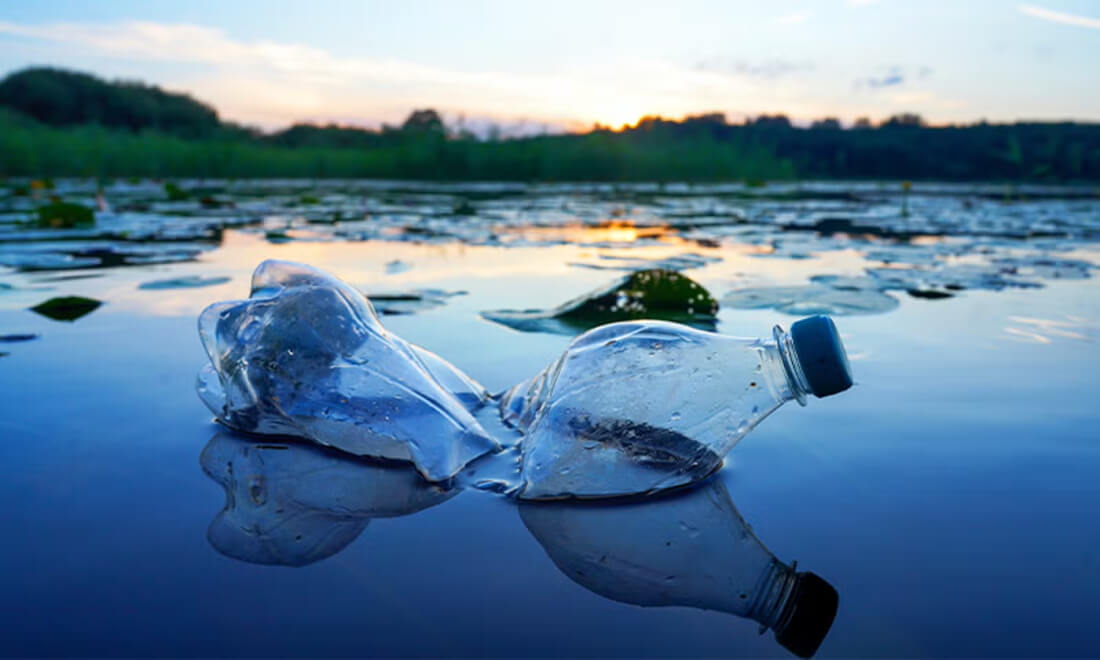
Many of the animals and plants found in the Galapagos, the Pacific archipelago where Charles Darwin began to shape his theory of evolution, are found nowhere else in the world. It is estimated that 97% of land mammals and reptiles, 80% of birds, and 30% of plants are endemic. Despite being found some 1,000 kilometers off the coast of Ecuador, the inhabitants of these islands are not immune to the problems spreading across the continent. Pollution—plastics are a particular concern—the presence of invasive species, and habitat disruption due to climate change are just a few examples.
In 2023, Ecuador signed a debt-for-nature swap agreement with a dual goal. This was to reduce its national debt and, in exchange, strengthen the protection of these unique islands. This agreement will allow $450 million to be distributed to finance conservation activities for almost two decades.
This is a pioneering operation. It revives the debt-for-nature swaps that began to appear in the 1980s and transforms them, increasing their complexity. In recent years, Cape Verde, Gabon, and Belize have taken similar steps. All of them accept swaps, which was the case decades ago—are surrounded by debate.
On January 15, Indonesia and the United States also completed a $35 million swap. The goal is to protect and restore the country’s coral reef ecosystems. This will also help Indigenous peoples and local communities that depend on the reefs for their livelihoods. This swap—the fourth between the US and Indonesia—marks the first-ever application of the US Tropical Forest and Coral Reef Conservation Act. All of this is intended to boost funds, specifically earmarked for reefs.
According to a study by the International Institute for Environment and Development, debt-for-nature swaps in the 49 countries most at risk of defaulting on their external debts could free up to $100 billion to restore nature and aid climate change adaptation.
How debt-for-nature swaps work
Countries in Latin America and the Caribbean, like other countries in the Global South in general, face a double challenge: tackling and paying off their external debt while investing in adapting to and protecting themselves from environmental crises such as climate change and biodiversity loss.
Debt limits the number of resources these countries can invest in adaptation and mitigation, which in turn makes it difficult for them to access more international financing. Faced with this situation, a solution has been proposed: debtor countries could swap part of their debt by committing to investing the savings in policies that have a positive impact on the environment.
“Swaps are transactions that combine finance and the environment. In other words, they are environmental finance transactions that generate some kind of savings on a country’s external debt, which is then invested in projects or programs with a positive impact on both climate change and biodiversity issues,” explains Federico Azpiroz, a consultant specializing in climate and sustainable finance at the Observatory on Financing for Development (OFD) at the National University of San Martín. Azpiroz previously held the position of head of International Climate Finance at the Argentine Ministry of Economy.
These swaps appeared in the 1980s, in a context marked by the Latin American debt crisis. At that time, the swaps that were proposed were bilateral, in which one country forgives part of another country’s debt (usually interest).
“And what does the debtor country gain? Obviously, it can use those resources for climate or nature projects instead of paying off foreign debt,” explains Azpiroz. “The creditor country, on the other hand, can count it as international development financing and gains in terms of image. It can say, ‘We are doing the right thing on environmental issues.’ It also improves communication.”
There are also swaps based on more complex operations. “In these, debt securities that are on the market, bonds, are repurchased, and savings are generated because these bonds are generally purchased at a value below par. A loan can be taken out with a multilateral bank, such as the Inter-American Development Bank (IDB), with an international NGO, or a bond can be issued at a better rate, because financial instruments, such as guarantees, are used to reduce the risk of the transaction and, therefore, the financial cost for the debtor country,” explains the OFD consultant.
“The new complexity lies in the fact that the resources to make this purchase come from a sustainable bond or from some sustainability-related transaction with lower risk,” he adds. “We see this in the case of Ecuador, which has the novel aspect that the operation is guaranteed by the IDB and has political risk insurance from the U.S. International Development Finance Corporation (DFC). This is the first time that this combination of a guarantee and political risk insurance has been used, and it reduces the interest rate.”
Advantages and disadvantages of debt-for-nature swaps
Since they first emerged in the 1980s, debt-for-nature swaps have been surrounded by debate. Their proponents highlight benefits such as the potential to free up financial resources and the ability to restructure debt.
“Their positive impact depends on how strategic the use of resources is,” says Azpiroz. “They are beneficial when they involve the work of the populations living in those places, because they promote economic development, which is extremely important. They also have a positive impact when the projects to be implemented are aligned with the countries’ climate policy and arise from multisectoral validation.”
“In some cases, it can improve the country’s debt profile. Especially in small countries that have a lot of external debt, but where a single transaction can significantly reduce that stress. This is not the case, for example, in Argentina, which will never be able to carry out a debt swap large enough to change its credit profile,” he adds.
According to the International Institute for Environment and Development (IIED), more than $100 billion in debt could be released from developing countries to be invested in nature restoration and climate change.
“Many of the countries most threatened by rising temperatures have huge debt burdens and are constantly paying interest to the wealthier nations that have contributed far more to the climate crisis. The money that could help restore damaged ecosystems and protect vulnerable communities from floods or droughts is instead flowing to banks and polluters in the rich world,” says Laura Kelly, director of IIED’s Shaping Sustainable Markets research group.
“The International Monetary Fund and the World Bank should recognize that the current way of lending simply does not work for people or the planet. Our broken financial system must leave behind 20th-century colonialist thinking if it is to serve everyone fairly,” he adds.
On the other side are those who highlight the problems and challenges associated with debt-for-nature swap schemes. The main one is linked to the fact that, in conditions of inequality between two countries or between a state and another entity, they can increase dependence between them or lead to the adoption of policies and measures that are not the most proper.
“There are countries whose public sector has developed plans and trained technical teams to determine which environmental policy should be implemented. When there is an imbalance in technical capabilities, there can be a problem, because countries buy, so to speak, a package of measures and policies that are not the most appropriate or a priority,” explains the consultant specializing in Climate and Sustainable Financing at the Observatory on Financing for Development (OFD) at the National University of San Martín.
“To avoid this problem, it is essential to set up balanced governance throughout the project from the outset. Negotiate what the financial terms of the swap will be,” he adds. In other words, set up the terms of the debt swap in such a way that they help the debtor country and serve to bring about environmental improvements.
“On the other hand, when these resources are defined unilaterally by agencies or development banks, there can be problems with implementation and policy alignment. While the contribution of multilateral banks can be significant, it is important to try to keep as much autonomy as possible in defining climate policies,” says Azpiroz.
Another significant problem, according to the OFD consultant, is that this solution does not raise a real debate on the issue of debt in developing countries. Nor does it address the link between financial debt and global debt.
“Is it a way to free up resources? It could be. Does it address the real problem of developing countries’ external debt? No. This is a discussion that should be taking place and a criticism that is often heard from developing countries at the international level. The debt crisis must be resolved in a systemic manner, and this is not a tool that will achieve that,” concludes Azpiroz.
From Ecuador to Argentina: different exchange proposals
The swap with which Ecuador hopes to dedicate part of its foreign debt to improving conservation in the Galápagos Islands involves the private sector, a factor that sets this swap apart from the first ones proposed four decades ago.
Since then, quite different mechanisms have been proposed, some of which look like they adapt to the specific circumstances of each state. “In Argentina in particular, it is very interesting to see what can be done at the provincial level,” says Azpiroz. “The idea is to go beyond debt swaps at the national level and carry them out in the provinces, which have the same problems but lack the fiscal resources to implement projects and programs related to climate change and nature.”
“We are looking into working on some kind of exchange of this type, still at a very early stage, because we are beginning to see that there is potential to use resources in sustainable infrastructure, for renewable energy, for food production, or for working with rural communities. There are many possibilities,” says the specialist.
In recent years, Barbados combined a repurchase of nearly $300 million of its domestic bonds with initial financing from the IDB and the Green Climate Fund; The Bahamas unlocked more than $120 million with a $300 million debt swap financed by Standard Chartered and backed by the private sector; and Seychelles repurchased $21.6 million in debt thanks to a loan from the NGO The Nature Conservancy and philanthropic grants.
The amounts involved in these swaps are expected to be given to climate resilience and ocean conservation, among other goals. And the list goes on with other countries that in recent years are joining the possibility of swapping their debt in exchange for investing in nature.
SOURCE: BBVA