The global packaging industry is at a critical crossroads. For decades, single-use plastics (SUP) have set the standard for mass consumption thanks to their low cost and convenience. However, the linear “extract, produce, and dispose” model has proven to be unsustainable.
Globally, plastic production has exceeded 400 million metric tons annually, of which 139 million metric tons are single-use plastics, packaging. For corporations running in Latin America and the Caribbean, understanding the size of this challenge, and staying ahead of regulations is no longer just a measure of social responsibility, but a matter of business survival.
The True Imprint of Linearity
The impact of SUPs goes beyond the visible pollution of our oceans and coastlines; it is a structural problem that affects the climate and public health.
- Fossil fuel dependence and emissions: 98% of primary plastics are derived from fossil carbon. In 2019 alone, global production of primary plastics generated approximately 2.24 gigatons of carbon dioxide equivalent, accounting for 5.3% of total global greenhouse gas emissions.
- Chemical and health risks: Substances such as phthalates and bisphenol A (BPA), used in the manufacture of plastics, can leach into food and beverages. Exposure to these substances, combined with the ingestion and inhalation of microplastics, is a growing concern for human health.
- Local socioeconomic costs: In our region, the improper management of this waste places enormous socioeconomic pressures on communities. 17,000 metric tons of plastic waste are dumped daily in open landfills in Latin America and the Caribbean, which increases public spending on health care, the cleanup of coastal ecosystems, and flood control.
The End of Expanded Polystyrene (EPS) and the New Wave of Regulations
The legislative landscape in the region is changing rapidly, requiring brands to adapt their digital ecosystems and product portfolios. Leading countries are setting the standard by banning highly polluting and hard-to-recycle materials, such as expanded polystyrene (EPS).
- Chile: Through Law 21,368, Chile implemented an immediate ban on the distribution of EPS products at food retail outlets, drawing further on the Extended Producer Responsibility (EPR) Law, which requires the redesign of packaging.
- Colombia: Law 2232 set up the phase-out of 21 single-use plastic products by 2030, specifically including EPS packaging and containers.
- Mexico: Although there is no unified federal law, many states, and major cities (such as Mexico City and key tourist areas in Quintana Roo) have banned the use of EPS and other single-use plastics.
These regulations, based on the principles of Extended Producer Responsibility (EPR), require corporations to finance and ensure the proper end-of-life management of the packaging they place on the market.
The Illusion of Alternatives and the Value of Eco-Design
Faced with regulatory pressure, many brands fall into the trap of simply “substituting materials,” ignoring the fact that this can shift environmental impacts to other value chains.
- The challenge of “bioplastics”: Biodegradable or bio-based plastics do not solve the problem of waste generation. If these polymers enter conventional recycling streams, they can contaminate the recycled plastic and reduce its quality.
- The problem of poorly implemented “paperization”: Replacing plastic with paper or laminated cardboard (multilayer composites) presents serious challenges. Paper packaging that requires plastic coating (PE or PLA) to protect against moisture or grease severely complicates recycling, as current infrastructure has limited capacity to separate these composite materials.
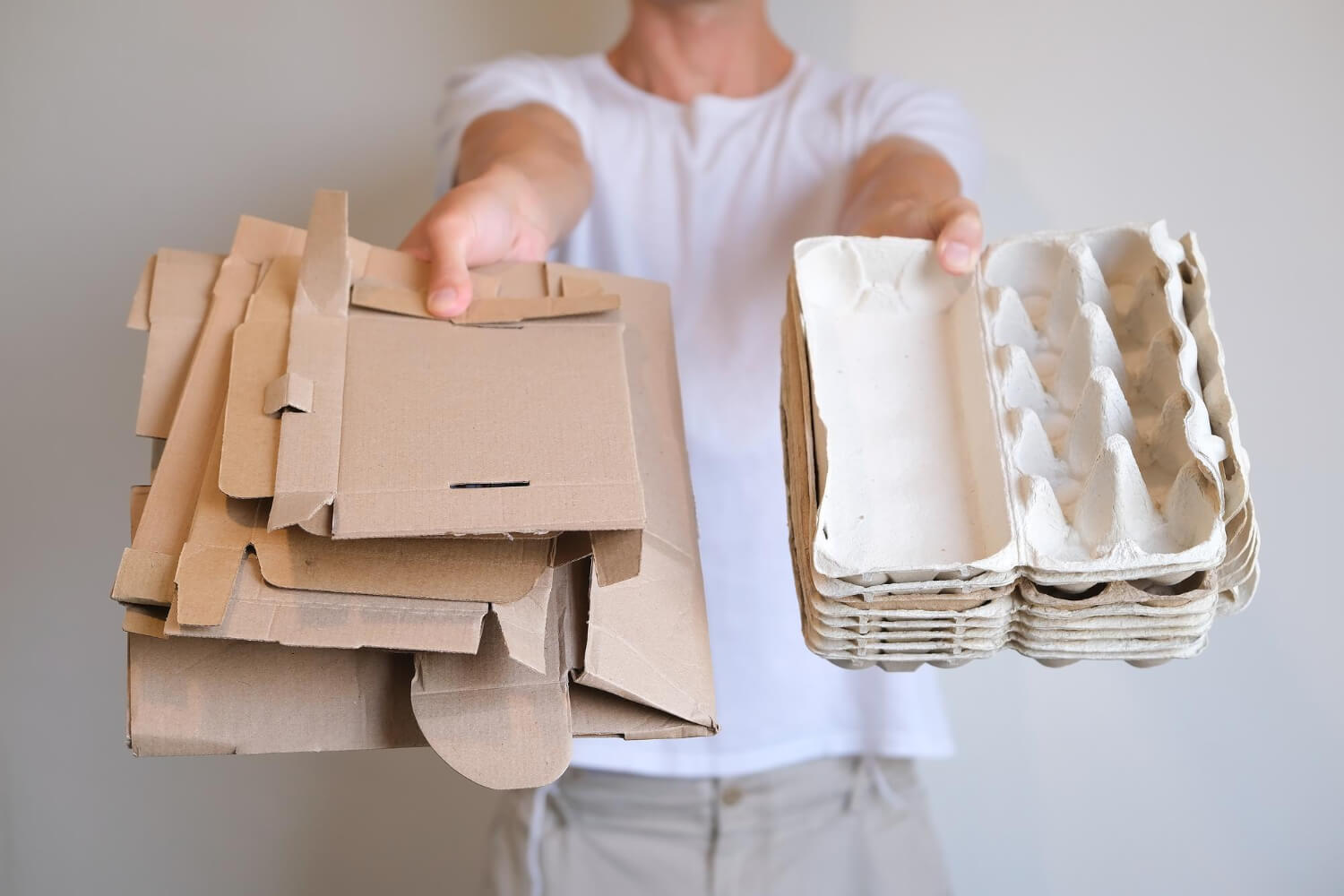
The Solution: Eco-Design and Single-Material Packaging For the transition to cellulose- or fiber-based packaging to be truly sustainable and circular, it must adhere to the principles of eco-design and Design for Recycling (D4R). The technical literature is clear: the success of these alternatives lies in using single-material paper without complex barriers, ensuring that the product design is fully compatible with local recycling or composting infrastructure.
More than 80% of a product’s environmental impact is decided during its design phase. Therefore, adopting cellulose or molded pulp packaging that meets strict circularity criteria (free of persistent chemicals and problematic plastic laminates) is the surest way to follow REP regulations and meet corporate sustainability (ESG) requirements.
The shift toward a circular packaging ecosystem is not just a response to legislation; it is a business positioning strategy. Brands that lead innovation through single-material packaging, prioritizing emissions reduction and respect for biodiversity, will be the key players in the new regional economy.
SOURCE: www.cepal.org